The Future of Digital Banking 2026: A Deep Dive into the Post-Neobank Era
“From Transactions to Transformations: How AI and Blockchain Are Rewriting the Financial DNA.”
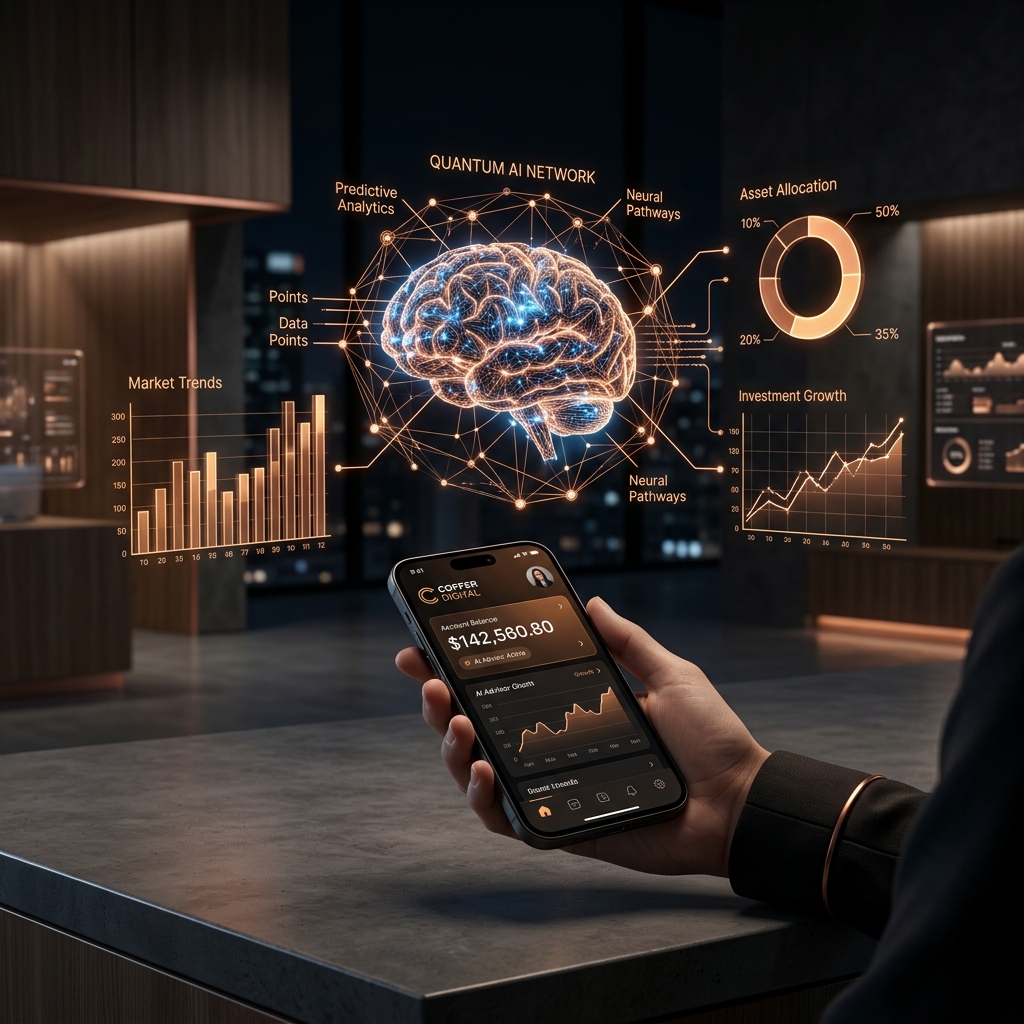
🚀 Strategic Highlights for 2026:
- Autonomous Finance: Self-managing wealth agents that eliminate “Decision Fatigue” for consumers.
- Hyper-Personalized Credit: “Fluid Credit” limits based on real-time professional data and social reputation.
- Biometric Continuity: Security that identifies you by your unique gait, tap-pressure, and behavioral DNA.
- CeDeFi Convergence: The bridge between centralized trust and decentralized transparency.
- Invisible Infrastructure: Banking as a utility built into cars, wearables, and smart home systems.
“In a world that never stops talking, the most revolutionary act you can perform is to listen. Discover how the ‘Power of Silence’ is redefining leadership, innovation, and emotional intelligence in 2026…”
Recommended Read: Summary of blog
In the early 2020s, digital banking was about “convenience”—moving money from your phone instead of standing in a queue. But as we navigate through 2026, the definition of a “Bank” has suffered a radical, irreversible mutation. We are no longer in the era of digital banking; we are in the era of Cognitive Finance.
The paradigm shift is absolute. Traditional financial institutions that survived the “Neobank Wave” have had to strip their legacy code and adopt something much more organic: Agentic AI. For the first time in history, money is behaving as a programmable asset that understands its owner’s intent better than the owner does. This deep-seated transformation is driven by four primary pillars: pervasive connectivity, generative intelligence, decentralized transparency, and the ethics of sustainability. In this comprehensive exploration, we dismantle the myths of 2026 finance and look at the reality of how your wealth is managed when the human is no longer the primary operator.
1. The Era of Autonomous Finance Agents (AFA)
In 2026, the user interface (UI) of a bank is becoming obsolete. The “app” is disappearing, replaced by LLM-powered (Large Language Model) finance agents that reside in your virtual assistant. These Autonomous Finance Agents (AFAs) do not wait for commands; they act on “Inferred Intent.”
Imagine your car’s insurance policy is about to expire. In 2022, you would compare quotes. In 2026, your AFA has already analyzed 500 competitive offerings, negotiated a lower rate based on your flawless driving data from your smart vehicle’s sensors, and switched the policy—saving you $400 without you ever lifting a finger.
This shift from Passive Banking to Active Stewardship is redefining the wealth gap. AFAs ensure that even small-scale savers are utilizing the same high-frequency investment strategies that were once reserved for institutional whales. By sweeping pennies into high-yield liquidity pools at 2 AM and pulling them back into a checking account at 8 AM, AI is maximizing every cent of capital efficiency.
2. Hyper-Personalization and “Fluid Credit”
The credit score (CIBIL or FICO) is a ghost of the past. In 2026, banks use Dynamic Trust Metrics. Instead of a static number based on old debt, financial institutions use real-time data streams to offer what is known as Fluid Credit.
Banks now analyze “Alternate Proof of Capacity.” This includes your professional growth trajectory (via AI-analysis of your career contributions), your utility payment stickiness, and even your “Social Integrity Score”—a decentralized metric of how you interact within commerce ecosystems.
Found a house you want to buy while browsing a virtual real estate portal? Your bank doesn’t require a 30-day approval process. It issues a Smart Mortgage Contract instantly because it has been monitoring your financial health in real-time for years. The interest rate is not a tier; it is a personalized calculation that breathes and changes monthly based on your actual risk levels.
3. The Invisible Guard: Security via Behavioral DNA
Cyber-fraud in 2026 has become so sophisticated that passwords, 2FA, and even fingerprints are easily spoofed by generative AI models. The industry response? Continuous Behavioral Biometrics.
Security is now “ambient.” As you use your device, the banking platform is constantly verifying the “Micro-Patterns” of your interaction. It measures the angle at which you hold your phone, the rhythmic cadence of your typing, the pressure of your thumb on the screen, and even the electrical resistance of your skin.
If someone steals your phone and tries to transfer funds, the system detects a “Mismatched Interaction Signature” within milliseconds—even if the thief has your face and passcode. This internal layer of defense has shifted the focus from blocking entry to monitoring behavior, making 2026 the first year where digital theft rates have actually entered a downward spiral.
4. CeDeFi: The Convergence of Trust and Efficiency
The battle between “Old Banks” and “Crypto” is over. In 2026, they have merged into CeDeFi (Centralized Decentralized Finance). Your traditional bank account now operates on a private-public hybrid blockchain backbone.
What does this mean for the user? Total Settlement Reality. In 2022, a cross-border wire transfer took 3 days. In 2026, it takes 3 seconds. By using tokenized deposits and Central Bank Digital Currencies (CBDCs), banks have eliminated the “Intermediary Friction” that used to cost consumers billions in fees.
Your bank is now your portal to the decentralized world. You can borrow against your tokenized real estate assets or earn 8% yield on USD-stablecoins, all within the same regulated environment of your primary banking app. This “Best of Both Worlds” approach has brought the stability of Regulation to the efficiency of Code.
5. Spatial Banking: From Apps to Virtual Advisories
For complex financial planning, looking at a 2D graph on a smartphone is no longer sufficient. Enter Spatial Banking. With the mass adoption of light AR (Augmented Reality) glasses in 2026, your financial life is visualized around you.
You sit with a virtual advisor—a photorealistic AI avatar that has the collective knowledge of 10,000 chartered accountants—to walk through your “Financial Future Space.” You can physically “push” a slider into the future to see how a $1,000 investment oggi impacts your retirement housing options in 2D and 3D.
This “Immersive Wealth Management” has solved the biggest problem in finance: the human inability to visualize long-term consequences. By making the future “visible” and “walkable,” banks are helping people stay disciplined in their savings goals like never before.
6. The Green Banking Mandate
In 2026, how you spend is as important as how much you spend. Your bank statement now includes a Carbon Fidelity Score. AI algorithms automatically categorize your spending according to its environmental impact.
Banks are offering lower interest rates to users who maintain a “Low-Impact Portfolio.” Furthermore, every transaction you make can be set to automatically “offset” its footprint—buying carbon credits or planting trees—via micro-donations integrated at the checkout level. Green banking is no longer a corporate PR stunt; it is an integrated financial requirement.
Frequently Asked Questions (2026 Edition)
1. Will a human ever manage my money again?
In 2026, human intervention is reserved for “Exceptional Logic” cases—complex family trusts, cross-border legal disputes, or high-level emotional support. For 99% of daily management, AI is safer, faster, and more efficient.
2. What happens if the AI agent makes a mistake?
All AFAs are insured by Registry-Level Smart Insurance. If an algorithm makes a transaction that deviates from your “Risk Appetite Profile,” the system automatically reverses it using blockchain-ledger proofs, and the loss is covered by the bank’s automated liability fund.
3. Can I disable my behavioral biometrics?
You can, but most banks will restrict your transaction limits significantly or require manual video verification for every payment above $50. The data is stored using “Zero-Knowledge Proofs” (ZKP), meaning the bank knows “it’s you” without actually owning a copy of your biometric data.
4. What is a “Ghost Bank”?
Ghost banks are 100% cloud-native institutions with no offices and no human staff. They operate entirely through smart contracts and AI. In 2026, these are popular for “Micro-Niche” groups like digital nomads or solar entrepreneurs.
5. How do I get an AI-ready credit score?
Start by connecting your non-financial data points: your professional certifications, your utility history, and your e-commerce interactions to your bank’s “Discovery Hub.” Transparency is the new currency for creditworthiness.
6. Is physical cash completely dead?
Cash has become a “Niche Luxury.” It is used for privacy-centric bartering or collectibles, but 99.8% of global commerce in 2026 is conducted through programmable, trackable digital layers.
Conclusion: The Future is Sovereign
The transformation of digital banking in 2026 is, at its core, a story of Sovereignty. For the first time, technology is strong enough to handle the complexity, but flexible enough to respect the individual. We are moving away from being “Customers” of a bank and toward being “Sovereign Users” of an intelligent financial ecosystem.
“Wealth management is no longer a privilege of the rich; it is an algorithm of the many.”
EMBRACE THE COGNITIVE REVOLUTION.
Legal Disclaimer: This article is for informational, educational, and artistic purposes only. The “2026 projections” are based on current emerging technologies and market analysis but do not constitute guaranteed outcomes or financial advice. Banking regulations vary by jurisdiction. Always verify with your local financial regulators. All images are AI-generated for illustrative purposes.